The Rise of Agentic AI Jobs: 15 New Careers to Look For
Sep 25, 2026
VMPL
New Delhi [India], September 25: AI has crossed a line, and the job market is shifting along with it. We aren't just asking chatbots for answers anymore. AI can now plan, pick tools, make decisions and act with very little human input. That change is called agentic AI, and it is opening doors to a whole new wave of tech roles.
From Agentic AI Engineers to AI Security Specialists, here are 15 emerging jobs at the center of this shift, along with the skills you need to go after them.
What Makes Agentic AI Different?
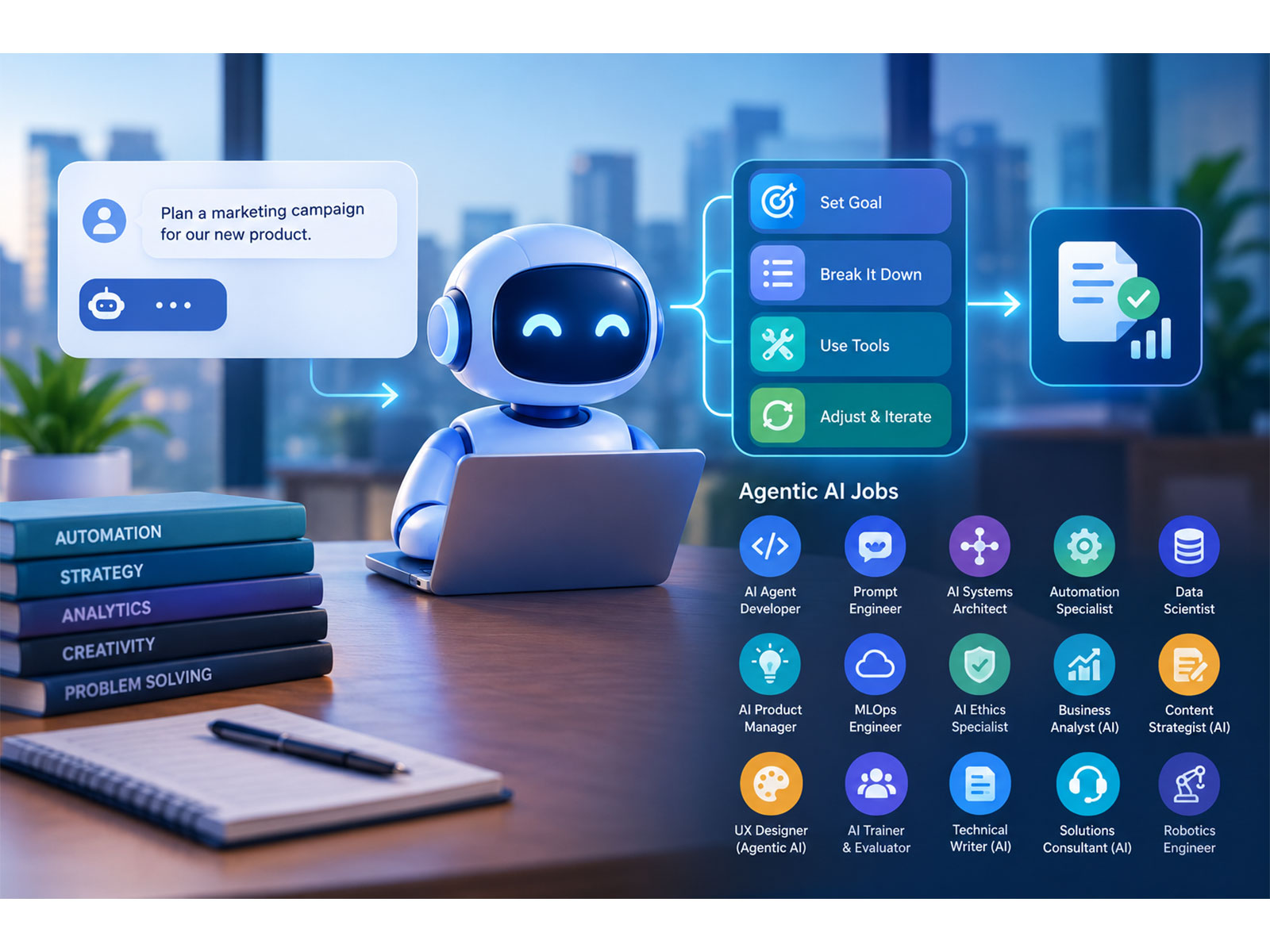
Most AI tools just wait for your question and then give you an answer. That's the full exchange. An AI agent works another way. It acts independently and makes its own decisions with limited inputs from humans. It picks up a goal, breaks it into smaller steps, uses the tools along the way, and shifts course when something goes wrong. That one difference, doing instead of just replying, is why this entire job category exists.
15 Emerging Agentic AI Jobs for Aspiring AI Professionals
1. Agentic AI Engineer
This is the central role in the field. These engineers build the agents themselves, systems that plan, reason and finish tasks with very little human input. Most of them use frameworks like LangChain or AutoGen, and they need a real feel for how LLMs reason, not only how to write code around them.
- Skills: Python, LLMs, agent orchestration, tool calling.
2. AI Agent Developer
A more hands-on version of the role above. Developers write the actual code behind each agent, deciding what tools it can touch, what its goals are, and how it chooses between options. If the Agentic AI Engineer draws the plan, this is the person who builds it.
- Skills: Python, APIs, prompt engineering, software development.
3. AI Engineer
A broader role, and often where people start before they specialize. AI Engineers build the machine learning systems and infrastructure that agentic tools depend on. Without that groundwork, there is nothing for an agent to actually run on.
- Skills: Machine learning, deep learning, model development, cloud platforms.
4. LLM Engineer
Every agent needs something close to a brain, and that is usually a large language model. LLM Engineers train and fine-tune these models so they reason well, then keep them stable once they go live. This role sits right at the center of how an agent actually thinks.
- Skills: NLP, fine-tuning, prompt engineering, vector databases.
5. AI Solutions Architect
Somebody has to map out how all the moving parts fit together, and that's this role. Architects design the systems that let agents work with a company's current data and tools, while thinking about scale, security and how every piece communicates.
- Skills: System design, cloud computing, APIs, enterprise integration.
6. AI Automation Engineer
Not every task needs a person walking through it step by step, and this role figures out which ones do not. Automation engineers find repetitive work and build agents to take it over. They spend a lot of time with business teams, turning messy real world processes into something an agent can actually follow.
- Skills: Workflow automation, agent tools, process mapping.
7. Multi Agent Systems Engineer
Sometimes a single agent cannot handle the whole job. This role builds setups where several agents work together, each taking a piece of a larger task without getting in each other's way. It is still a fairly new specialty, but it is growing quickly as companies move from one agent to entire teams of them.
- Skills: Multi agent orchestration, distributed systems, agent communication.
8. AI Product Manager
Coding isn't needed here. This role decides what gets built and why. Product managers stand between engineers, designers and business leaders, and they need enough AI knowledge to set goals that are truly realistic. Communication counts as much as technical skill in this seat.
- Skills: Product strategy, business understanding, communication.
9. AI Evaluation Engineer
How do you actually know an agent is doing its job well? That question is the whole reason this role exists. Evaluation engineers build tests and set metrics to check whether an agent's decisions actually hold up under pressure. Without this work, companies are basically trusting agents on faith.
- Skills: AI evaluation, testing frameworks, statistics.
10. AI Safety Engineer
Agents do not always behave the way you would expect, especially in edge cases nobody planned for. Safety engineers build guardrails and monitoring so an agent stays within safe limits even when things get strange. As agents get handed more real-world power, this role only becomes more important.
- Skills: Risk assessment, guardrail design, model monitoring.
11. AI Governance Specialist
As agents take on more responsibility, someone has to set the rules for how they're used. Governance specialists write policy, work closely with legal and compliance teams, and make sure the company really follows it. This matters a lot in fields like finance and healthcare, where mistakes are never cheap.
- Skills: Policy development, regulatory knowledge, risk management.
12. RAG Engineer
An agent is only as good as the information it can reach. RAG engineers build systems that let agents pull in current, real facts instead of relying only on what they were trained on months earlier. This process, called retrieval-augmented generation, is one of the most in-demand skill sets in AI right now.
- Skills: RAG pipelines, vector databases, embeddings, search.
13. AI Integration Engineer
An agent that cannot connect to anything is not much use to anyone. This role builds the links between agents and the tools they need, whether that is a database, an email system, or internal software. It is practical, hands-on work that makes sure an agent can actually act, not just suggest something.
- Skills: API integration, systems engineering, databases.
14. AI Operations Engineer
After an agent goes live, someone has to keep it running well. Operations engineers handle deployment, watch for trouble, and fix problems before they grow into something bigger. Picture DevOps, but built around AI systems rather than ordinary software.
- Skills: MLOps, monitoring tools, cloud infrastructure.
15. AI Consultant
Not every company can build an AI team overnight, and that's where this role steps in. Consultants study a business's goals and pain points, then suggest where agents could make a real difference. The job relies less on deep coding and more on strategy, judgment and clear communication.
- Skills: Business strategy, AI literacy, communication.
How to Prepare for These Roles
Almost every one of these jobs starts from the same place. Learn Python, get comfortable with machine learning, and understand how LLMs actually reason. After that, time spent building agents that plan, remember and call tools teaches you more than any textbook will. Then the road splits. Some roles stay deep in code, such as Agentic AI Engineer or RAG Engineer. Others rely more on strategy and talking to people, like AI Consultant or AI Product Manager.
Want to go technical? Build real projects, because reading only gets you so far. A structured Agentic AI Course from Simpliearn can cover agent design, orchestration and actual builds in one place, and that beats piecing things together from random videos.
Just starting and need a base first? Simpliearn’s full AI Engineer Course covers machine learning, deep learning and application development from zero. With that behind you, moving into agentic AI or any other AI path gets a lot easier.
Conclusion
These roles show how quickly agentic AI is changing the job market. Some are very technical, while others focus on strategy and oversight. Whatever direction you pick, the first steps are the same: learn the basics, build real things, and keep adapting. The field moves fast, and nothing suggests it will slow down.
(ADVERTORIAL DISCLAIMER: The above press release has been provided by VMPL. ANI will not be responsible in any way for the content of the same.)